

Many Viking appliance problems start with small upkeep that slipped: a condenser packed with dust, a burner cap sitting crooked, a dishwasher filter that hasn’t been rinsed in months. None of these take long to fix at home. This guide breaks Viking appliance maintenance down by appliance, then gives you a simple schedule so nothing gets missed. Always check your owner’s manual first, because care steps differ between Viking models and series.
Gas ranges, rangetops and cooktops
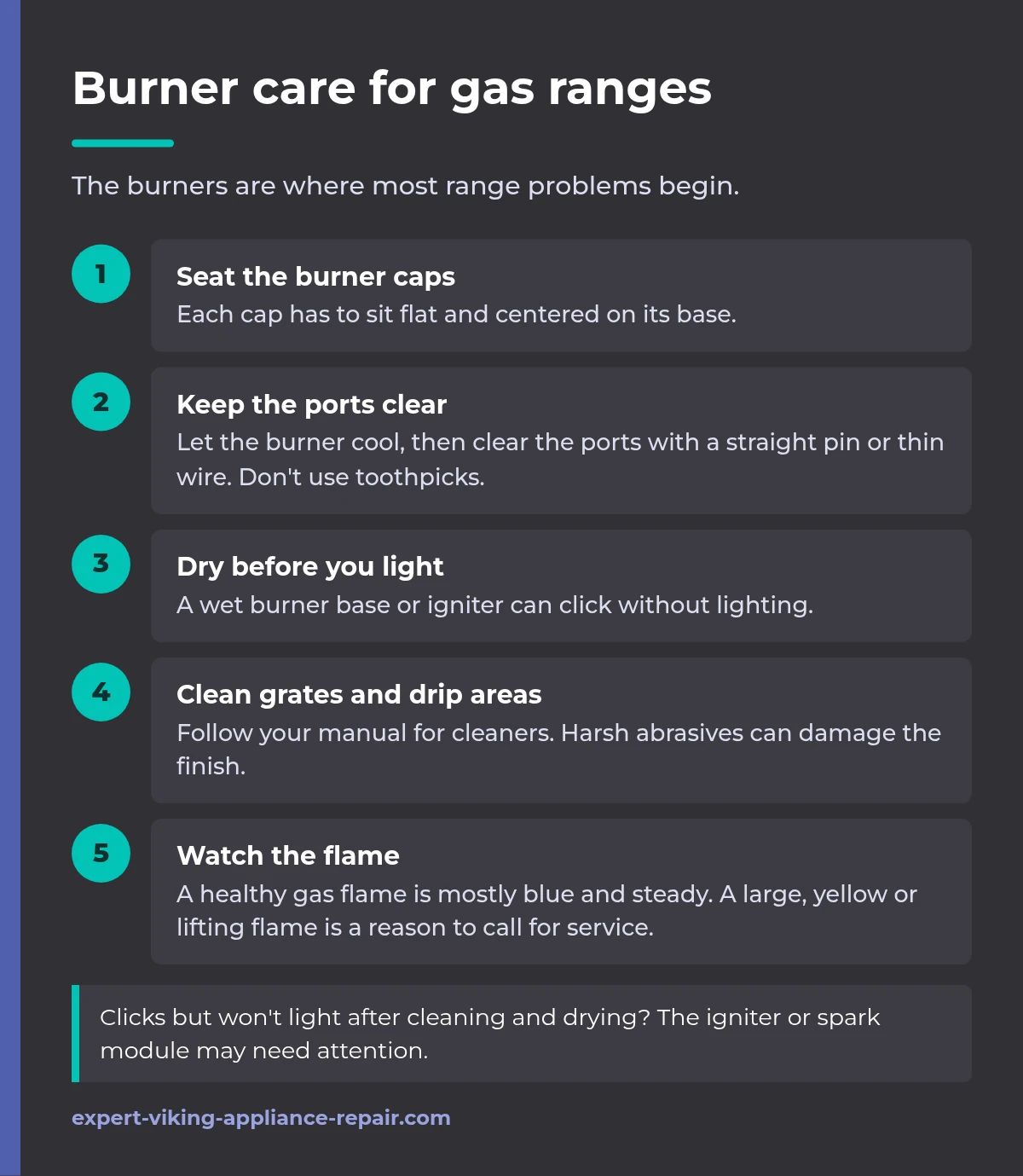
The burners are where most range problems begin.
- Seat the burner caps properly. After cleaning, each cap has to sit flat and centered on its base. A cap that’s slightly off can cause an uneven flame, a burner that won’t light, or an igniter that keeps clicking.
- Keep the burner ports clear. Boil-overs can block the small flame openings. Let the burner cool, then clear the ports with a straight pin or a thin wire. Don’t use toothpicks, which can snap off inside a port.
- Dry everything before you light it. A wet burner base or igniter can click without lighting. Let washed parts dry completely.
- Clean the grates and drip areas. Follow your manual for cleaners. Harsh abrasives can damage the finish.
- Watch the flame. A healthy gas flame is mostly blue and steady. A large, yellow or lifting flame is a reason to call for service.
If a burner clicks but won’t light after you’ve cleaned and dried it, the igniter or spark module may need attention. Our post on Viking oven spark module care explains what that part does. For general cleaning, see how to clean a stove top.
Ovens
- Wipe spills once the oven has cooled. Burnt-on spills smoke the next time you bake.
- Treat the door gasket gently. Don’t scrub it or use oven cleaner on it. A damaged gasket lets heat escape and can throw off cooking temperatures.
- Use the self-clean cycle the way the manual says. Some racks and accessories have to come out first. Ventilate the kitchen while the cycle runs. Our self-cleaning oven tips cover what to do before and after.
- Pay attention to preheating. If the oven takes much longer than usual to reach temperature, or bakes unevenly, it’s worth having it checked.
Refrigerators, freezers and wine coolers
Refrigeration problems often come down to airflow and seals.
- Clean the condenser. Depending on the model, the condenser sits behind the top grille or behind the lower front grille. Dust and pet hair there make the compressor work harder. Turn the unit off at the power switch or breaker before you vacuum it, as your manual describes.
- Check the door gaskets. Wipe them with warm, soapy water and look for tears or flattened spots. Make sure each door closes fully on its own.
- Change the water filter on schedule. If your model has a water dispenser or ice maker, the filter has a recommended replacement interval in the manual. Read our guide to cleaning ice maker water lines.
- Don’t block the inside vents. Leave space around the vents so cold air can move.
For more detail, see our posts on refrigerator maintenance and wine cooler maintenance.
Dishwashers
- Clean the filter. If your Viking dishwasher has a removable filter, rinse it under running water and refit it securely.
- Check the spray arms. Make sure they spin freely and the holes aren’t blocked by food or mineral buildup. Here are our tips for cleaning Viking dishwasher spray arms.
- Wipe the door seal and the bottom edge of the door. Food and detergent residue collect there and can cause odors or leaks.
- Keep the rinse aid filled. It helps dishes dry and reduces spotting.
Ventilation hoods
The hood protects the rest of your kitchen from grease and heat.
- Clean the grease filters or baffles. Many can go in hot, soapy water or the dishwasher. Check your manual first.
- Wipe the underside of the hood. Grease buildup there can drip and smell.
- Listen to the blower. A new rattle, a grinding sound or weak suction means the blower or filters need attention.
Stainless steel care
- Wipe with a soft cloth in the direction of the grain.
- Use mild dish soap and water, or a cleaner made for stainless steel.
- Avoid chlorine bleach, steel wool and abrasive pads, which can scratch or stain the finish.
- Dry the surface after cleaning to prevent water spots.
A simple maintenance schedule
| How often | Task |
|---|---|
| After each use | Wipe cooktop spills once cool; wipe the stainless finish as needed |
| Monthly | Rinse the dishwasher filter; check the spray arms; clean the hood filters if you cook often |
| Every few months | Clean the refrigerator condenser; inspect the door gaskets on the refrigerator, oven and dishwasher; clear the burner ports |
| As your manual specifies | Replace the refrigerator water filter; run the oven self-clean cycle |
| Before the holidays or heavy cooking seasons | Test every burner and the oven; check that the refrigerator and freezer hold temperature |
| Once a year | Book a professional inspection of gas connections, igniters and refrigeration performance |
What to leave to a technician
Some jobs need tools, parts and safety checks you shouldn’t attempt at home:
- Gas valve, regulator or gas line work
- Igniter and spark module replacement
- Sealed-system refrigeration repairs and refrigerant work
- Control board and wiring repairs
- Oven door hinge and spring repairs, which are under tension
If you smell gas, don’t use any switches or burners. Leave the house and call your gas utility from outside.
Signs your Viking appliance needs service
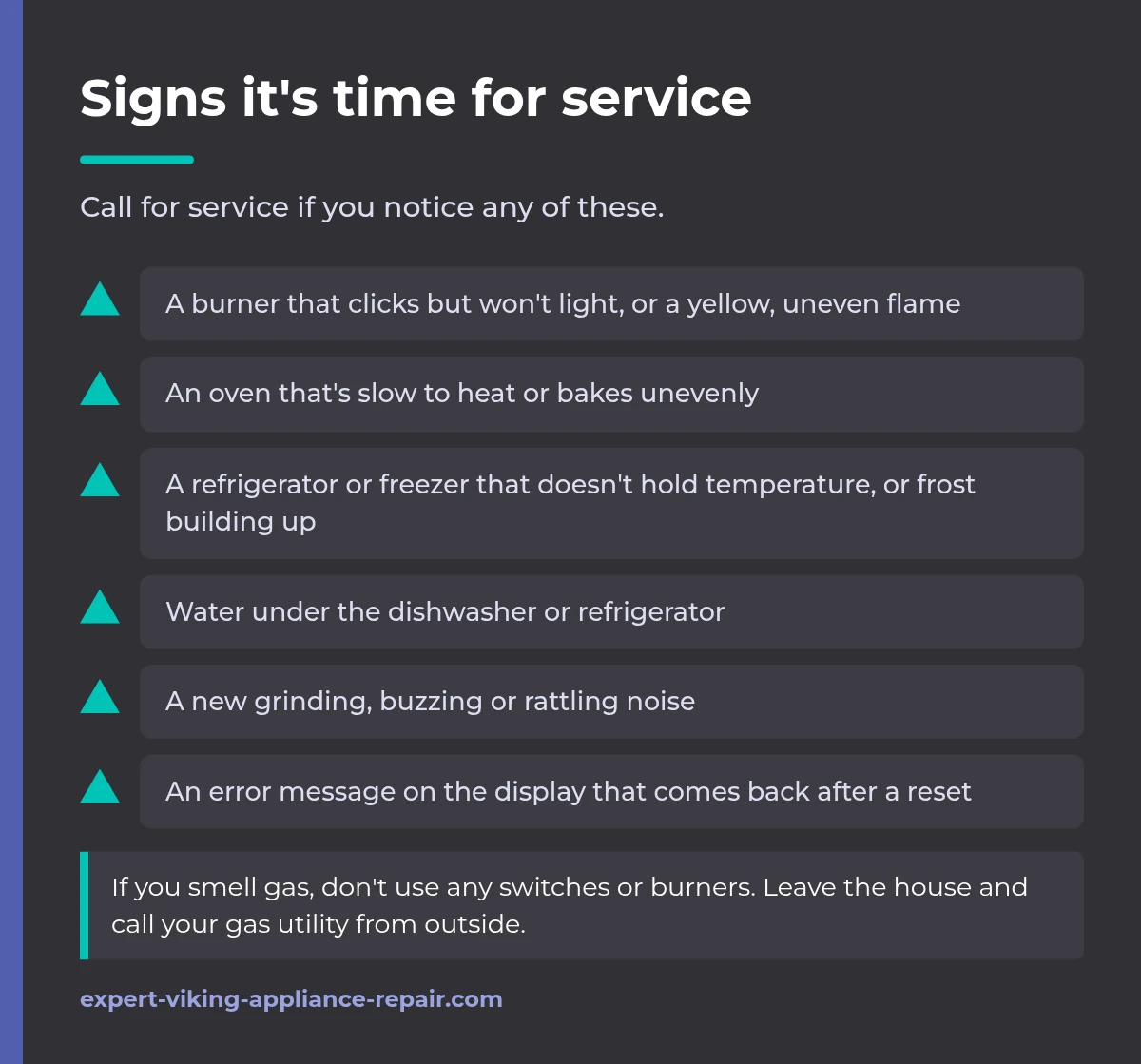
- A burner that clicks but won’t light, or a yellow, uneven flame
- An oven that’s slow to heat or bakes unevenly
- A refrigerator or freezer that doesn’t hold temperature, or frost building up
- Water under the dishwasher or refrigerator
- A new grinding, buzzing or rattling noise
- An error message on the display that comes back after a reset
If your refrigerator is showing several of these at once, our post on signs your refrigerator is dying can help you decide your next step.
Frequently asked questions
How often should Viking appliances be professionally serviced?
A yearly inspection is a good routine for gas ranges and refrigeration, especially before a busy cooking season. Call sooner if you notice any of the warning signs above.
How do I clean stainless steel Viking appliances without damaging them?
Use mild soap and water or a stainless steel cleaner on a soft cloth, wiping with the grain. Skip bleach, steel wool and abrasive pads.
Why does my Viking burner keep clicking?
The cap may be off center, or the burner or igniter may be wet or dirty. Let it dry, reseat the cap and clear the ports. If it still clicks, the igniter or spark module needs service.
Which maintenance task is easiest to forget?
Cleaning the refrigerator condenser. It’s out of sight, but a dusty condenser makes the refrigerator work harder and can lead to cooling problems.
Can I use my Viking range during a power outage?
It depends on the model. Some gas burners can be lit with a match during an outage, but electronic ignition and many oven functions won’t work. Follow the instructions in your owner’s manual before trying it.
Need help with a Viking appliance?
Expert Viking Appliance Repair works only on appliances, including Viking ranges, ovens, cooktops, refrigerators, wine coolers and dishwashers. To reach the office for your city, find your location, or contact us and describe what the appliance is doing. You can also read more guides on our blog.